How Duolingo’s Duo Turns a Language App Into a Habit Machine
App review: Duo isn’t decoration. How Duolingo uses its owl across streaks, notifications, and social — with FY 2025 metrics from SEC filings and official Duo imagery.
- App
- Duolingo
- Mascot
- Duo
- FY 2025 revenue
- $1.04B
- Q4 2025 DAU
- 52.7M
- Q4 2025 MAU
- 133.1M
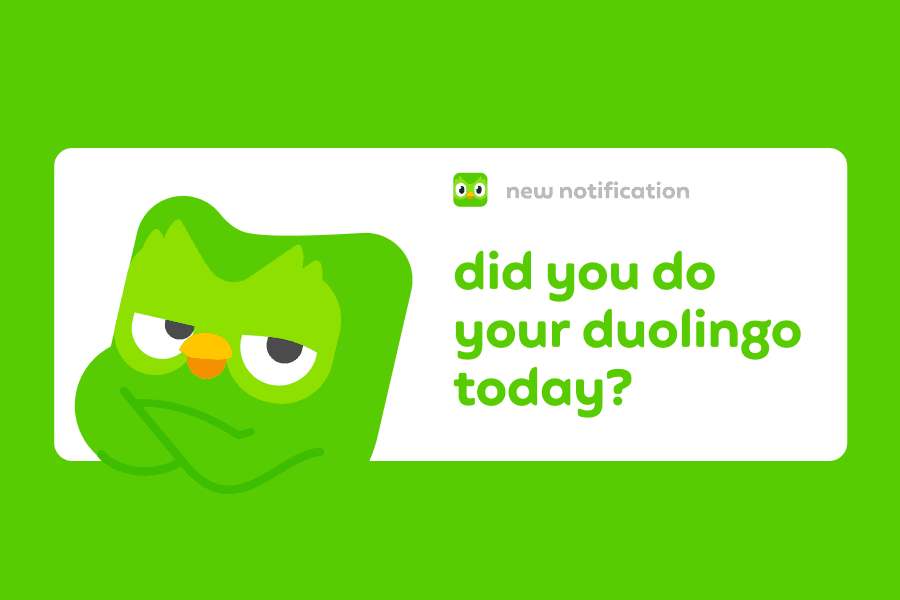
Duolingo is the clearest modern proof that a mascot can be product infrastructure, not a landing-page sticker.
The company ships language lessons. The brand people remember is a green owl named Duo. That gap — utility versus identity — is exactly where most apps lose the feed. Duolingo closes it on purpose.
This review looks at how Duo shows up inside and around the product, what Duolingo’s own filings say about scale, and what indie teams can copy without copying the owl.
Who Duo is (and why he is green)
Duo has been part of Duolingo since the company’s early days. Co-founders Luis von Ahn and Severin Hacker wanted a mascot from the start; the owl was chosen because owls signal wisdom and learning.
The green color is famously an inside joke: Hacker disliked green, so von Ahn leaned into it. Designer Greg Hartman has described Duo’s evolution from a flat logo (the letters D-U-O forming his face) to a fully expressive character used across the product — including a major 2019 redesign led by Duolingo’s design team to make Duo easier to animate and emotionally readable.
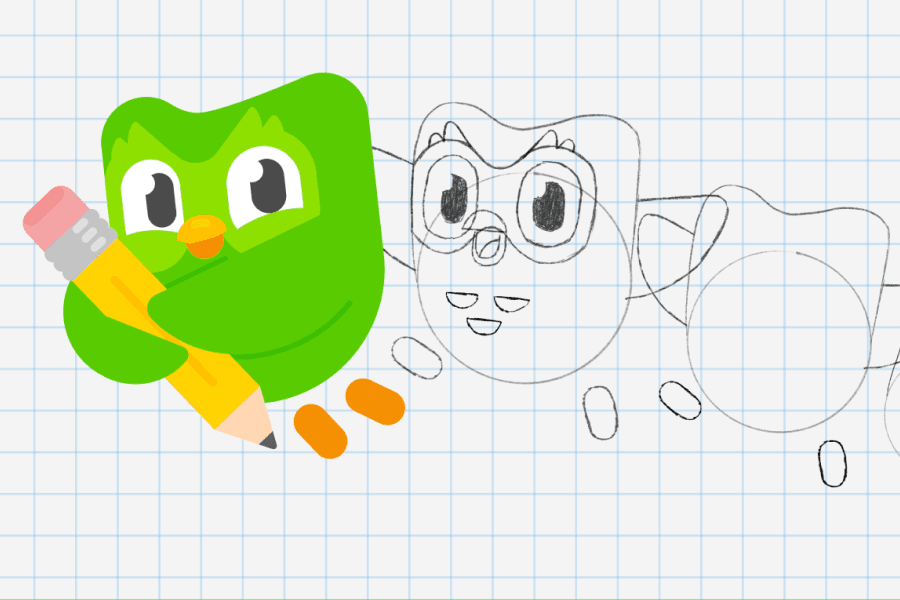
Image: Official Duo illustration from How to draw Duo in 10 easy steps (Duolingo Blog, Sam Zabell / Samia Khalaf). © Duolingo, Inc. Used here for editorial commentary on the mascot.

Image: Duolingo touch icon / app mark featuring Duo, as published on the Duolingo Blog. © Duolingo, Inc.
Scale: what Duolingo reported for FY 2025
The metrics in the card above come from Duolingo’s Q4 and full-year 2025 shareholder letter filed with the SEC (year ended December 31, 2025):
| Metric | Q4 2025 | FY 2025 |
|---|---|---|
| Revenue | $282.9M (+35% YoY) | $1,037.6M (+39% YoY) |
| Total bookings | $336.8M | $1,158.4M |
| Daily active users (DAU) | 52.7M (+30% YoY) | — |
| Monthly active users (MAU) | 133.1M (+14% YoY) | — |
| Paid subscribers (period end) | 12.2M (+28% YoY) | — |
Duolingo also states that its flagship app has “organically become the world's most popular way to learn languages” and ranks as the top-grossing app in the Education category on both Google Play and the Apple App Store.
Those are company disclosures — not independent audits of “mascot ROI.” But they establish the business context: Duo operates inside a product with nine-figure quarterly revenue and tens of millions of daily users.

Image: Duolingo logo (2019) via Wikimedia Commons (PD text logo; trademark may apply).
The character is the product premise
Duo’s modern personality — streak-anxious, passive-aggressive, occasionally menacing on social — mirrors what the app actually does: remind you every day.
When the mascot’s emotional job matches the product job, every surface reinforces the same story. A generic “Don’t forget your lesson” notification is spam. The same message with Duo’s face is a relationship.
Image: Official Duolingo Blog cover art for “Hi, it’s Duo”: Meet the AI behind the meme. © Duolingo, Inc.
Where Duo compounds memory
Successful mascot apps rarely park the character on one hero. Duolingo stretches Duo across a placement map:
- App icon / mark — silhouette readable at small sizes
- Push notifications — streak reminders and guilt-forward copy
- Streaks and widgets — habit scaffolding with a witness
- Social and meme marketing — remixable character for UGC
- In-product coaching — onboarding, mistakes, wins
Duolingo’s home-screen widgets make that system visible: Duo’s mood shifts with streak risk — waving, anxious, melting, furious — so the character is the retention loop.
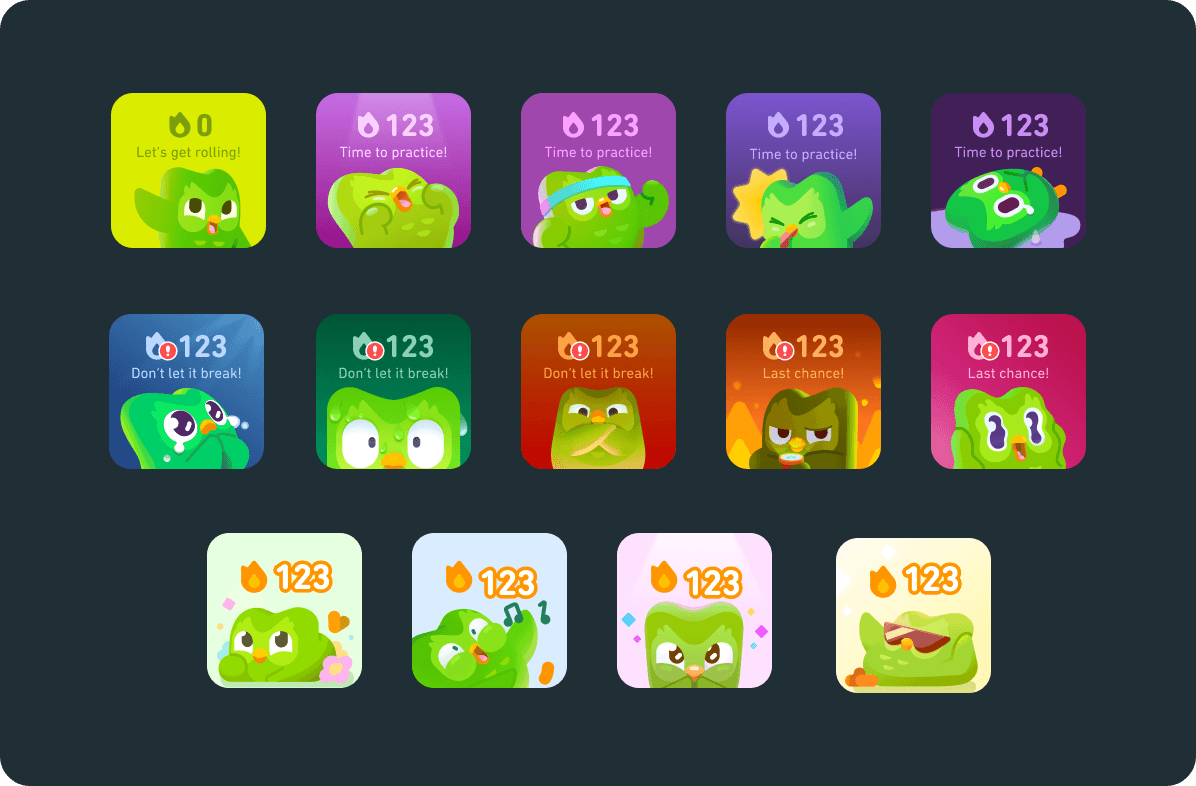
Image: Duo widget / streak-state illustrations from How we developed our addictive and delightful widget (Duolingo Blog). © Duolingo, Inc.

Image: Cover art from the same widget feature post. © Duolingo, Inc.
The “Death of Duo” stunt in February 2025 only worked because the character already lived in product. On February 11, Duolingo announced Duo had died (later framed as hit by a Cybertruck). The app icon temporarily showed a “dead” Duo; users were invited to earn XP to revive him via bringback.duolingo.com.
Reported campaign impact (third-party and company-cited — treat as directional, not gospel):
| Signal | Source | Reported figure |
|---|---|---|
| Social impressions (two weeks) | Fast Company citing Duolingo | ~1.7 billion |
| Android global downloads (day after launch) | TechCrunch citing Similarweb | +38% |
| iOS daily downloads (announcement day) | TechCrunch citing Appfigures | ~172,000 |
| XP earned toward revival goal | Energy PR citing Duolingo | 50.9B+ XP |
Duolingo revived Duo roughly two weeks later. The lesson for product teams: virality without product placement is a firework; virality with in-app stakes is a flywheel.
What “mascot-led retention” actually looks like
Cute alone does not retain. Duo works because the character is wired to states the product already has:
| Product state | Duo’s job |
|---|---|
| Idle / overdue | Nudge without sounding like a CRM |
| Success | Micro-celebration that trains recognition |
| Streak risk | Emotional stakes (use carefully) |
| Social share | A remixable face for UGC |
If your app has those states and no face, you are asking typography and confetti Lotties to do character work. They usually cannot.
What to steal (and what not to)
Steal
- Lock one silhouette and proportion sheet early
- Map poses to real product states before you commission fifty costumes
- Put the character in notifications and empty/success moments first
- Give the mascot a voice that matches the product’s actual behavior
Do not steal
- Passive-aggressive guilt if your category is banking, health crisis, or grief
- Meme chaos that fights a serious brand promise
- A new owl every sprint (inconsistency trains forgetfulness)
How to get a Duo-shaped system without a Duo budget
Commissioning a full gesture bible still works if you have months and a character designer. Many teams do not.
A compressed path:
- Write a one-page brief (audience, emotional job, hard bans)
- Lock a base character before exploding into poses
- Ship idle, welcome, success, error, celebrate for your top three surfaces
- Export formats your stack can host (SVG packs for UI, PNG for push)
- Drop the character into real screens early — dark mode, small sizes, dense UI
That is the studio model behind MascotAI: brief → pick a look → animated SVG gesture pack you can theme and ship. Live example studios on the homepage let you feel the craft before you spend tokens.
Verdict
Duolingo’s downloads and revenue have many causes — curriculum, gamification, AI features, distribution. Duo is not a side quest in that story. The owl is how the product feels at the moments that decide whether someone opens the app tomorrow.
If your app is invisible in the feed, start with a face that can idle, celebrate, and recover with the same bones — then put it where users hesitate.
References
- Duolingo, Inc. Q4 and full-year 2025 shareholder letter (SEC filing, Feb 26, 2026) — investors.duolingo.com
- Duolingo SEC Form 10-K for year ended December 31, 2025 — revenue, MAU, DAU, paid subscribers
- Luis von Ahn on Duo’s green color and mascot origins — The Verge, Apple Developer
- Greg Hartman on Duo’s design evolution — Advertising Week
- “Death of Duo” campaign coverage — Fast Company, TechCrunch
- Images (official Duolingo Blog): How to draw Duo, Widget feature, Hi, it’s Duo. Wordmark: Wikimedia. Brand kit: design.duolingo.com
- MascotAI — animated SVG mascot studios for apps